
A bathroom asks more of a window blind than any other room in the house. Every shower sends warm, wet air against the glass, the window is often at eye level with the street or the neighbours, and whatever you fit has to stay tidy for years with little more than a wipe. Choosing the best blinds for bathrooms comes down to three questions: will the material survive daily steam, how much privacy do you need and when, and how easy is it to keep clean? At our workshop in Duleek we make and fit bathroom blinds for homes across Meath, Drogheda and north Dublin, and this guide shares what we have learned from those installations.
What Makes the Best Blinds for Bathrooms Different?
Bathroom windows deal with condensation several times a day. Warm, moist air meets cold glass, droplets form, and anything sitting close to that glass stays damp for longer than it would anywhere else in the home. A fabric that soaks up moisture will hold on to it, and that is where mildew spots, sagging and odours begin. Many of the same rules apply in the kitchen, as we explained in our guide to the best blinds for kitchens.
The best blinds for bathrooms share four traits:
- Non porous or moisture resistant material, such as PVC coated fabric or treated polyester
- Rust free components made from aluminium or plastic
- A surface you can wipe down with a damp cloth and mild soapy water
- Privacy that still works after dark, when the lights are on inside
The Best Blinds for Bathrooms, Ranked by Material
Below are the options we recommend most often, starting with the most moisture tolerant.
Waterproof Roller Blinds
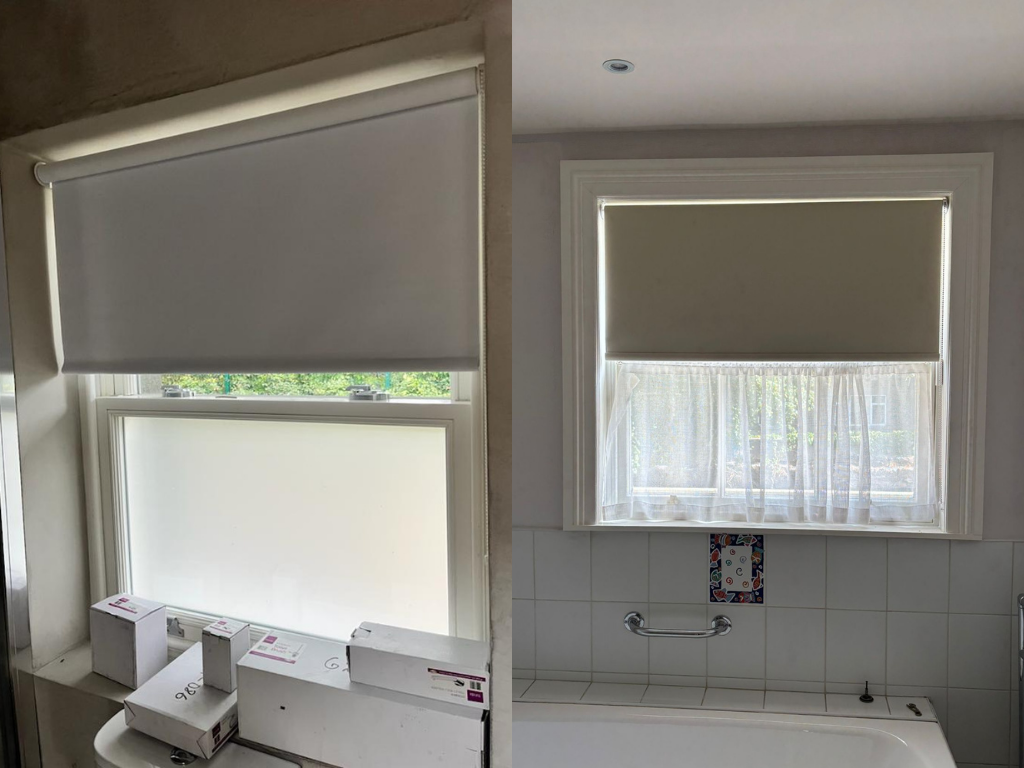
A roller blind in a PVC or waterproof fabric is the bathroom blind we fit most often. The fabric does not absorb water, so steam beads on the surface and dries off. It works on almost any window shape and comes in plain colours, textures and blackout versions. For a frosted window that only needs a clean finish, a white or light grey waterproof roller is a reliable, affordable answer. See the full range of roller blinds we manufacture in Duleek.
Screen Blinds
Screen blinds use a technical fabric, usually glass fibre or polyester coated in PVC, that copes very well with humidity and cuts glare. One point many suppliers skip: screen fabric is designed to let you see out, so at night, with the bathroom light on, people outside may see shapes through it. Screen blinds suit bathrooms that are not overlooked, or windows that already have frosted glass.
Perfect Fit Cassette Blinds
Perfect Fit cassette blinds clip into the beading of a uPVC window with no drilling. The blind sits inside its own frame, so there are no loose cords, the fabric stays close to the glass and it moves with the sash when you tilt the window open to ventilate. On the tilt and turn windows found in many newer Irish homes, this is often the neatest solution we can offer.
Pleated Blinds with Top Down Bottom Up Operation
Pleated blinds can be made top down bottom up. You cover the lower half of the window for privacy while daylight still comes in through the top. For a bathroom facing the street, it is one of the most practical layouts available. Ask for a moisture resistant fabric when you order.
Day and Night Blinds
Day and night blinds alternate sheer and solid stripes, so one pull of the chain changes the window from filtered light to full privacy. They work best in larger, well ventilated bathrooms and ensuites where you want a softer, more modern look.
Blinds to Avoid in a Bathroom
Some blinds look lovely in a showroom but struggle in a steamy room:
- Roman blinds in natural fabrics such as cotton or linen, which absorb moisture and can develop mildew in the folds
- Real wood venetian blinds, which can warp, crack or discolour with repeated humidity
- Any blind with exposed metal parts that are not rust protected
If you love the soft look of a roman blind, keep it for a dry room and choose a textured waterproof roller for the bathroom instead.
Best Blinds for Bathrooms Compared
| Blind type | Moisture rating | Privacy at night | Light control | Cleaning | Best for |
| Waterproof roller | 5/5 | High | Good | Wipe clean | Most bathrooms |
| Screen | 5/5 | Low to medium | Good, cuts glare | Wipe clean | Windows not overlooked |
| Perfect Fit cassette | 4/5 | High | Very good, few light gaps | Wipe clean | Tilt and turn uPVC windows |
| Pleated, top down bottom up | 4/5 | High | Very flexible | Gentle wipe | Street facing windows |
| Day and night | 3/5 | High when closed | Very flexible | Gentle wipe | Large, ventilated ensuites |
| Roman, natural fabric | 1/5 | High | Good | Difficult | Not recommended |
These ratings reflect our own experience fitting blinds in Irish homes, where most bathrooms see condensation every day.
Privacy Levels: Choosing the Best Blinds for Bathrooms by Window Position
Ground Floor Bathroom Facing the Street
You need full privacy day and night. A solid waterproof roller or a top down bottom up pleated blind gives you cover where it matters while keeping the room bright.
Upstairs Ensuite Overlooked by Neighbours
A Perfect Fit roller or a day and night blind works well here. Both close fully when you need them and look smart in a modern ensuite.
Window Above the Bath or in a Wet Room
Choose a waterproof roller and keep the fabric clear of direct splashes. If the window is hard to reach over the bath, motorised blinds with a battery motor and remote control mean nobody has to lean across the tub. Battery models also avoid new wiring near water.
Bathroom with Frosted Glass
Frosted or patterned glass hides detail during the day, but at night some patterns still show silhouettes when the light is on. A blind adds that missing night privacy and gives you control over light, which glass alone cannot do.
How to Keep the Best Blinds for Bathrooms Free from Mould
Even the right blind will struggle in a bathroom with no airflow. A few habits make a real difference:
- Raise the blind or tilt the window open after a shower so the glass and fabric dry quickly
- Run the extractor fan for 15 to 20 minutes after bathing
- Wipe the blind with a damp cloth and mild soapy water once a month
- Avoid harsh or abrasive cleaners, which can damage coated fabrics
The Society of Chartered Surveyors Ireland explains that bathroom mould is usually a condensation problem linked to ventilation, heating and insulation. A blind will not fix poor ventilation, but the right material will not add to the problem.
Fitting Tips: Getting the Best Blinds for Bathrooms Right First Time
- Measure inside the recess carefully, as bathroom windows are often small and slightly out of square
- Keep the blind clear of window handles, taps and shower screens
- Choose a cordless or tensioned chain system that meets the EN 13120 safety standard for internal blinds
- Make sure the fabric does not rest against wet glass, which is where a Perfect Fit frame helps
This is why made to measure matters in a bathroom. We measure every window on site, so the blind fits the recess exactly and the fabric suits how the room is really used.
FAQ: Best Blinds for Bathrooms
Can roller blinds go in a bathroom?
Yes, as long as the fabric is PVC or waterproof. Standard fabric rollers can absorb moisture and mark over time.
Do I need waterproof blinds for a bathroom?
If the window is near the shower or bath, or the room gets condensation every day, yes. A well ventilated ensuite with the window away from the shower can use moisture resistant fabric instead.
Which blinds give the most privacy in a bathroom?
A solid waterproof roller or a top down bottom up pleated blind. Screen blinds are less private at night when the light is on.
Is frosted window film better than a blind?
Film gives fixed privacy but no light control and cannot be opened. A blind can be raised for full daylight and lowered whenever you need it.
See Bathroom Blind Fabrics at Our Duleek Showroom
The quickest way to choose is to see and touch the fabrics. Visit our showroom at Unit 6, Site 31, Duleek Business Park, A92KN32, just 15 minutes from Drogheda, or book a free home visit. We bring waterproof samples to your bathroom, measure on site and give you a quote on the spot. Call 041 988 2266 or 087 929 0220, Monday to Friday from 9am to 4pm and Saturday from 10am to 2pm.